
World Civil Defence Day: Key Vision for Homeland Security

Homeland Security under Increasing Pressure from Global Crises and Systemic Risks
International data confirm a persistent trend: crisis are multiplying and overlapping. The Global Risks Report 2024 by the World Economic Forum highlights a steady increase in natural disasters, health risks, and hybrid threats, direct consequences of climate change, globalised flows, and technological interdependencies.
These phenomena impose unprecedented constraints on security actors and civil protection systems, extending far beyond emergency management: the imperative is to anticipate, understand, and mitigate risks before they exceed national and European response capacities.
In this context, the ProtectEU strategy presented by the European Commission proposes a comprehensive overhaul of homeland security in Europe, incorporating not only the fight against organised crime and cybercrime but also threat anticipation, intelligence sharing, and the enhancement of societal resilience.
The International Civil Defence Day was established in 1990 by the International Civil Defence Organization (ICDO). Its objective is to raise awareness and prepare citizens to face risks related to natural disasters and those linked to human activities, while also promoting a better understanding of civil protection missions. This year’s theme is: “Managing Environmental Risks for a Resilient and Sustainable Future”
Since the beginning of 2026, major disasters have already impacted populations around the world: severe flooding in Mozambique, violent winter storms in New York and Russia’s Kamchatka Peninsula, and large-scale wildfires in Chile.
In 2025, global economic losses resulting from natural disasters were estimated at approximately USD 260 billion.
Victim Identification: Coordinated Action is Key
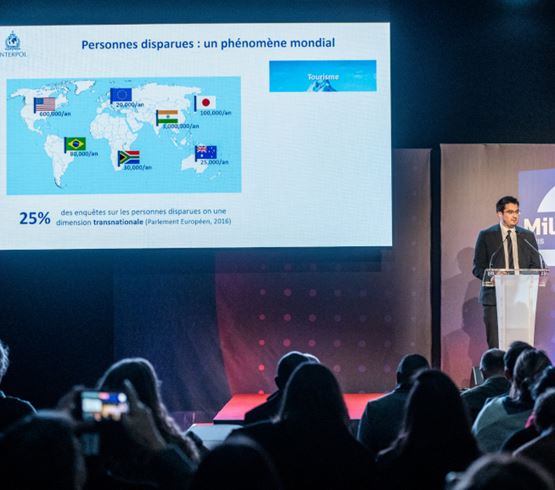
Mass disaster situations from tsunamis to infrastructure collapses or tragic migration flows regularly highlight the crucial issue of victim identification. Technology, whether biometric or DNA-based, is not sufficient on its own. Its effectiveness depends on integration into coordinated operational procedures, where emergency services, judicial authorities, and international institutions share standards and real-time data.
Fighting Organised Crime and Anticipating Crises
Contemporary organised crime is increasingly complex and transnational, exploiting both physical networks and digital spaces. European strategic assessments show that these networks operate across borders, making enhanced cooperation between member states, police agencies, and judicial authorities indispensable.
Within this framework, the use of data and artificial intelligence to analyse financial flows, map criminal networks, or anticipate shifts in trafficking structures has become a major operational resource. These tools do not replace human expertise but amplify analytical capacity, transforming vast volumes of information into actionable intelligence for investigators and strategic planners a theme widely discussed by professionals on the last edition of the event.
Cybercrime, Digital Security and Critical Infrastructure
The proliferation of cybercrime, combined with the increasing digitisation of public and private services, has made cyberspace an operational theatre in its own right. Contrary to common belief, digital security is not solely the remit of IT specialists: it underpins the safety of critical infrastructures (energy, communications, healthcare, etc.) and is now integrated into national and European resilience strategies.
This challenge was as well central to debates at Milipol, which explored how advanced digital tools including: digital evidence analysis and proactive network security should be incorporated into operational doctrines as well as public security policies. Such integration directly contributes to reducing vulnerabilities and strengthening public trust in institutions.

International Cooperation: an Essential Lever in Homeland Security
In a world where threats do not respect borders, international cooperation has become a key strategic lever. State security can no longer be approached in isolation: it requires close coordination between national and international partners to anticipate threats and effectively align prevention, operational response, and resilience at both European and global levels.
In a context where threats are intertwined and accelerating, having advanced tools or well-formulated doctrines is no longer enough. What truly makes the difference is the ability to articulate them within coherent action frameworks, combining anticipation, information sharing, inter-agency coordination, and technological innovation.
World civil protection day is not merely an occasion to recognise the efforts of practitioners and institutions. It presents a strategic challenge: translating lessons learned from field experience and reflections from platforms such as Milipol Paris into concrete actions that enhance population safety.
In this regard, the words of United Nations Secretary-General António GUTERRES resonate particularly strongly: “It is not only about reacting, but about investing in mechanisms that prevent crisis, protect societies, and build lasting resilience.”